Oct 26, 2026News & Insights
Why RV Adapters Melt: Causes & Fixes
Most melted RV adapters trace back to loose crimps and undersized contacts. See the failure signs and the specs to demand before bulk ordering.
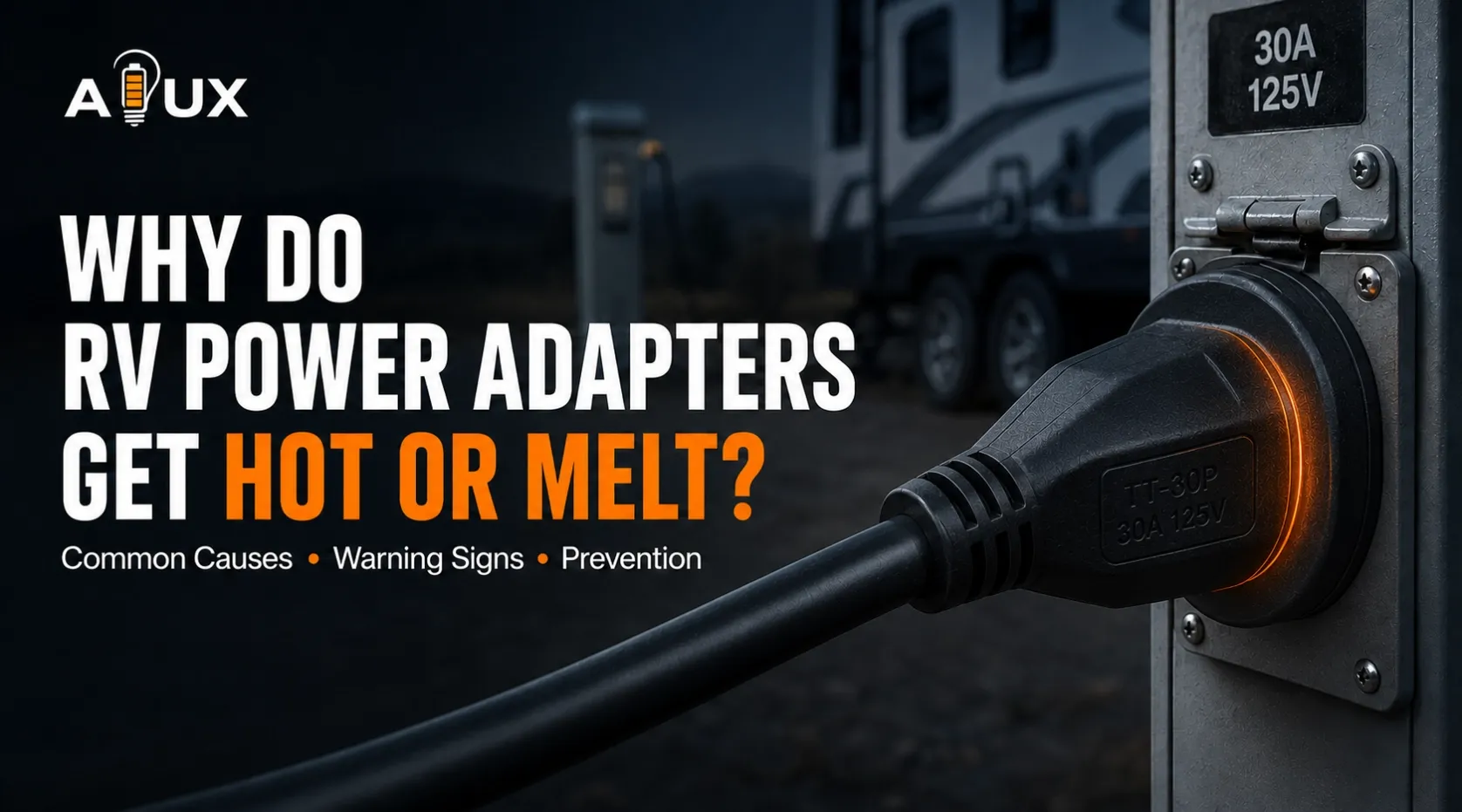
Why Do RV Power Adapters Get Hot or Melt?
An RV power adapter usually gets hot or melts because electrical resistance develops at the plug, campground outlet or internal terminal.
The most common causes are loose connections, worn contacts, heavy electrical loads and damaged conductors. If an RV adapter becomes too hot to touch, smells burned or shows discoloration, switch off the power and inspect the complete shore power connection immediately.
Why Does an RV Power Adapter Overheat?
The RV adapter is only one part of the electrical connection. The campground pedestal, shore power cord, adapter and RV inlet can all contribute to overheating.
1. Loose or Worn Campground Outlets
A worn campground receptacle is one of the most common causes of RV plug overheating.
The plug blades must fit tightly inside the outlet. If the connection is loose, less metal surface carries the current. This increases electrical resistance and concentrates heat around the plug blades.
Warning signs include:
- The plug feels loose inside the outlet
- One blade becomes hotter than the others
- The plastic turns brown or black
- The connection produces buzzing or crackling sounds
- The plug or outlet shows signs of melting
Do not continue using a damaged or loose pedestal outlet. Turn off the breaker and ask the campground operator to inspect it.
2. Dirty or Corroded Contacts
RV electrical connections are regularly exposed to moisture, dust and changing temperatures. Over time, dirt or corrosion can develop on the metal contacts.
Contaminated contacts create additional resistance and localized heat, even when the total electrical load remains below the circuit-breaker rating.
Before connecting, inspect the plug and outlet for:
- Dark or discolored blades
- Green or white corrosion
- Pitted metal surfaces
- Cracked or deformed plastic
- Signs of previous overheating
Never connect wet electrical components or clean an energized outlet.
3. Sustained High Electrical Loads
Air conditioners, microwaves, water heaters and space heaters can place a heavy load on an RV shore power connection.
A 30-amp RV supply provides approximately 3,600 watts at 120 volts. Connecting a 50-amp RV to a 30-amp outlet with an adapter does not provide 50-amp service. The available power remains limited by the 30-amp source.
Running several high-power appliances simultaneously can increase heat throughout the connection. A loose contact may become dangerously hot without drawing enough total current to trip the breaker.
4. Damaged Conductors or Internal Connections
An RV dogbone adapter should use conductors and terminals suitable for its rated current and voltage.
Possible internal problems include:
- Undersized conductors
- Broken copper strands
- Weak terminal crimps
- Loose internal connections
- Cable damage caused by repeated bending
- Insufficient strain relief
The cable may look normal while heat develops inside the molded connector. Bulging, softening or discoloration near the cable entry may indicate internal damage.
What Should You Do If an RV Adapter Gets Hot?
If the adapter becomes unusually hot, smells burned or begins to change shape:
- Turn off the campground pedestal breaker.
- Switch off high-power appliances inside the RV.
- Disconnect the adapter when it is safe.
- Allow the connector to cool.
- Inspect the outlet, adapter, power cord and RV inlet.
- Do not reuse a melted or deformed adapter.
- Ask a qualified technician to inspect the system if the cause is unclear.
Replacing only the adapter may not solve the problem. A worn campground outlet can also overheat a new adapter.
Why Didn’t the Breaker Trip?
A circuit breaker mainly responds to excessive current.
A loose or corroded connection can produce intense heat in a small area while the total current remains below the breaker’s trip level. Therefore, a breaker that has not tripped does not necessarily mean the connection is safe.
How to Prevent RV Adapter Overheating
Follow these basic precautions:
- Inspect the plug, cable and outlet before every use
- Confirm the correct NEMA configuration and connection direction
- Turn off the pedestal breaker before plugging or unplugging
- Insert every connector fully and securely
- Avoid operating several high-power appliances simultaneously
- Keep electrical connections clean and dry
- Disconnect using the grip handle, not by pulling the cable
- Fully unwind extension cords or cable reels under heavy loads
- Replace burned, loose or deformed components
Descriptions such as “30A to 50A adapter” can be confusing. A complete specification should clearly identify both ends, for example:
TT-30P 30A male plug → NEMA 14-50R 50A female receptacle
This configuration connects a 50-amp RV plug to a 30-amp power source. It changes the physical connection but does not increase the available electrical capacity.
Choosing a Reliable RV Dogbone Adapter
Buyers should look beyond general claims such as “heavy duty.” Important specifications include:
- Clearly identified plug and receptacle types
- Correct current and voltage ratings
- Suitable copper conductor size
- Secure terminal connections
- Durable molded connectors
- Strain relief at both cable entries
- Weather-resistant cable jacket
- Clear source-to-RV direction markings
- Continuity, insulation and load testing
For distributors and private-label brands, clear product labels and connection diagrams can reduce incorrect purchases, returns and after-sales complaints.
Frequently Asked Questions
Is it normal for an RV power adapter to feel warm?
Slight warmth may occur during extended operation. Excessive heat, burning odor, discoloration or softened plastic indicates a problem and should be inspected immediately.
Can a loose campground outlet melt a new adapter?
Yes. Poor contact pressure creates resistance and heat around the plug blades. Replacing the adapter will not repair a worn outlet.
Does a 30-amp-to-50-amp adapter provide 50 amps?
No. It allows a 50-amp RV plug to connect to a 30-amp source, but the available power remains limited by the 30-amp circuit.
Can I continue using an adapter after it has melted slightly?
No. Melting may damage the contacts, insulation and internal terminals. Replace the adapter and inspect the connected outlet and power cord before restoring power.
Final Takeaway
RV power adapter overheating is usually caused by a loose, contaminated or damaged connection combined with sustained electrical current.
Correct adapter selection, secure connections and sensible load management can reduce the risk of overheating. If an adapter becomes excessively hot or shows signs of melting, stop using it and inspect the entire shore power connection.
ALUX Electric supplies RV power adapters, extension cords and electrical connection products for wholesalers, importers and private-label brands.
OEM options include customized plug configurations, cable lengths, colors, packaging and labeling. Contact ALUX Electric to confirm specifications or request samples.