Aug 25, 2026
30 Amp vs 50 Amp RV Extension Cord: Which One Do You Need?
A complete guide to 30 amp vs 50 amp RV extension cords, helping distributors and RV users choose the right power cable based on RV type, power requirements, and applications.
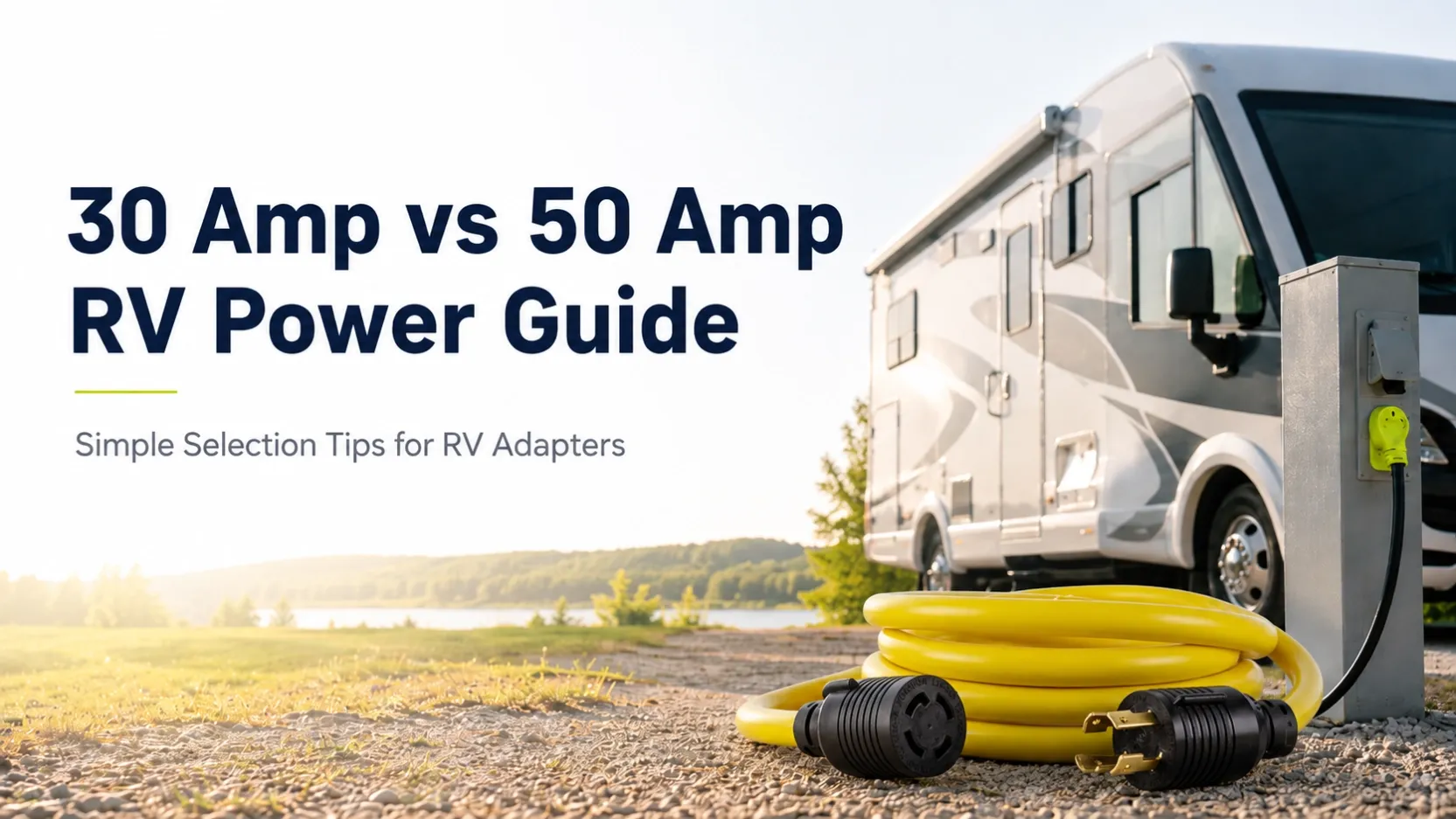
A Practical Guide for RV Owners and Distributors
When customers ask for an RV extension cord, one of the first questions they usually ask is:
“Should I choose a 30 amp or 50 amp RV cord?”
At first glance, they look similar. Both connect an RV to an external power source, and both are used in campgrounds, parks, and outdoor applications.
However, choosing the wrong type can cause problems such as:
- insufficient power supply
- overheating connectors
- frequent breaker trips
- poor performance of RV appliances
For RV owners, dealers, and electrical distributors, understanding the difference between 30 amp and 50 amp RV extension cords is important before making a purchase. ALUX Electric provides a range of RV extension cords and power adapters for different RV power requirements.
30 Amp and 50 Amp RV Systems: What Is The Difference?
The biggest difference is not the cable appearance, but the amount of power the RV electrical system can handle.
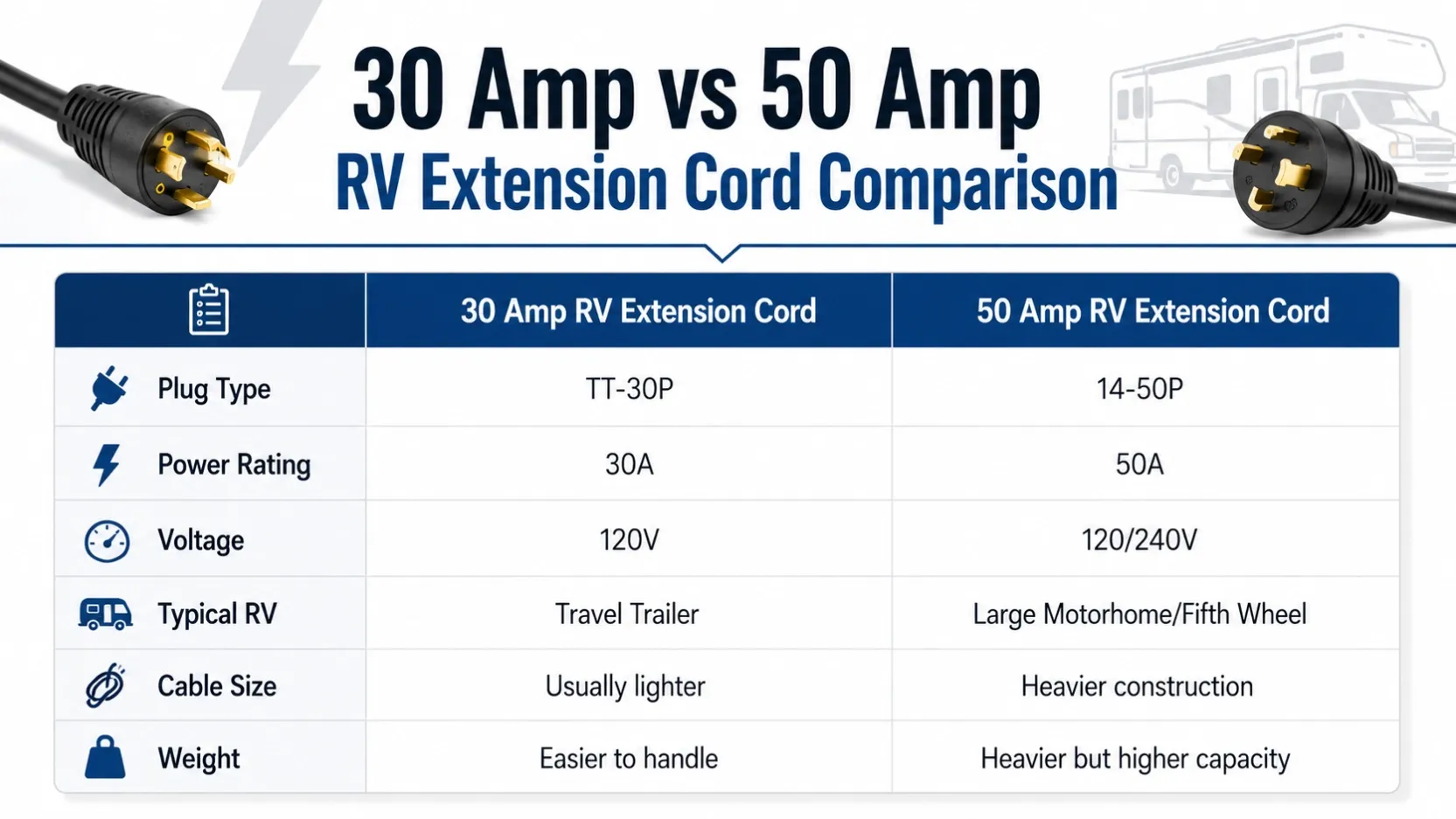
30 Amp RV Power
A 30 amp RV system is commonly found on:
- Travel trailers
- Small to medium motorhomes
- Compact campers
The standard plug is:
NEMA TT-30P
For distributors looking for reliable 30 amp RV power solutions, ALUX Electric supplies TT-30P RV adapter cords and extension cord solutions for camping and outdoor power applications.
Typical configuration:
- 120 Volt
- 30 Amp
- 3-wire system
For many RV users, 30 amp power is enough for daily needs, including:
- refrigerator
- lighting
- TV
- microwave
- one air conditioner
50 Amp RV Power
50 amp systems are usually used on larger RVs, including:
- Class A motorhomes
- Fifth wheels
- Luxury RVs
The common connector is:
NEMA 14-50P
Our 50 amp RV extension cords are designed for larger RVs requiring higher power capacity, including motorhomes and fifth wheels.
Typical configuration:
- 120/240 Volt
- 50 Amp
- 4-wire system
The main advantage is higher available power.
Large RVs often have:
- two air conditioners
- larger kitchen appliances
- more electrical equipment
so a 50 amp connection provides more flexibility.
30 Amp vs 50 Amp RV Extension Cord Comparison
Can You Use a 30 Amp Cord on a 50 Amp RV?
This is one of the most common questions from RV users.
The short answer:
You can connect different outlet types with a proper RV adapter, but the available power will still be limited by the lower-rated connection.
For example:
A 50 amp RV connected to a 30 amp campground outlet through an adapter will work, but it will only receive 30 amp power.
This means users may need to manage high-power appliances carefully.
How To Choose The Right RV Extension Cord?
When selecting an RV extension cord, we recommend checking four things.
1. Confirm Your RV Power Rating
Before ordering, check:
- RV electrical panel
- original power inlet
- manufacturer specification
Many purchasing mistakes happen because customers buy based only on plug appearance.
2. Choose The Correct Cable Construction
For RV applications, the cable is often exposed to:
- outdoor weather
- sunlight
- repeated bending
- campsite environments
A reliable RV extension cord usually requires:
- flexible copper conductors
- durable outdoor jacket
- strong strain relief
- quality molded connectors
3. Consider The Cable Length
Common lengths include:
- 25 ft
- 50 ft
- 75 ft
A shorter cable is easier to store and reduces voltage drop.
A longer cable provides more flexibility for different campsite layouts.
For most RV users, 25 ft and 50 ft are the most popular choices.
4. Think About Future Customer Needs (For Distributors)
For RV accessory distributors, carrying only one type of cord may limit sales opportunities.
A complete RV power range usually includes:
- 30 Amp RV Extension Cord
- 50 Amp RV Extension Cord
- RV Adapter
- Shore Power Cable
- Surge Protector
Different RV users have different power requirements.
Why RV Distributors Source Customized Extension Cords?
For wholesalers and distributors, the product itself is only one part of the supply chain.
Many buyers also need:
- different cable lengths
- customized colors
- private label packaging
- mixed container orders
- flexible MOQ
At ALUX Electric, we support OEM and customized RV power products for distributors, including RV extension cords, adapters, and related electrical accessories.
Our goal is to help customers build a reliable RV power product line instead of sourcing individual items separately.
Final Thoughts
Choosing between a 30 amp and 50 amp RV extension cord depends on the RV electrical system and the user's power requirements.
30 amp cords are a practical choice for many travel trailers and smaller RVs.
50 amp cords are designed for larger RVs that require more electrical capacity.
For RV owners, choosing the correct cord improves safety and reliability.
For distributors, offering both options helps serve a wider customer base.
FAQ
What is the most common RV extension cord size?
30 amp and 50 amp are the two most common RV power systems in North America.
Can I use a 50 amp RV cord with a 30 amp outlet?
Yes, with a proper adapter, but the available power will be limited by the 30 amp outlet.
Are RV extension cords different from regular extension cords?
Yes. RV extension cords are designed for higher continuous loads, outdoor environments, and specific RV connectors.